
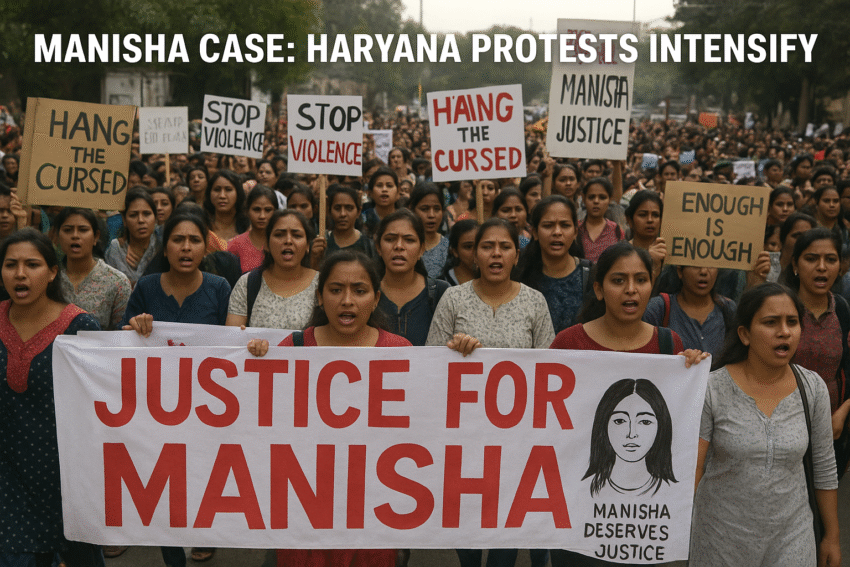
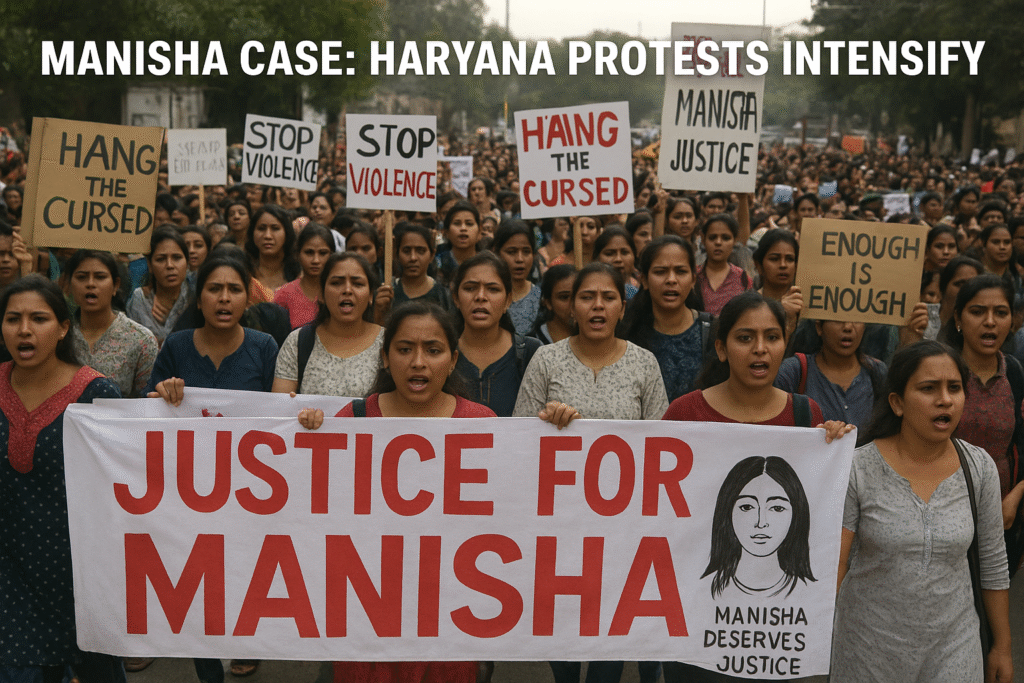
The Manisha case has become the latest flashpoint in Haryana, drawing nationwide attention and outrage. The shocking discovery of 19-year-old teacher Manisha, who was found dead with her throat slit, has sparked massive protests across the state. Students, parents, women’s groups, and activists have taken to the streets demanding swift justice, strict punishment for the accused, and urgent reforms for women’s safety.
Manisha Case: What Happened?
The Manisha case began when the young teacher, only 19, was found dead under mysterious circumstances. According to local police reports, her body was discovered inside the premises where she worked as a teacher. Initial investigations suggest foul play, as injuries on her body indicate possible premeditated assault before her throat was slit.
The brutality of the act has shaken not just Haryana but the entire country. The victim’s family has alleged negligence by authorities, claiming that despite earlier threats, no protective action was taken. This has further fueled anger among the public.
Protests Across Haryana Over Manisha Case
Since the incident, the Manisha case has triggered large-scale demonstrations. Thousands of people have joined marches in major towns like Rohtak, Hisar, and Jhajjar, demanding justice. Students, teachers, and women’s rights organizations are calling the crime a failure of the system.
In several cities, protesters blocked roads, raised slogans against administrative inaction, and called for immediate arrest of all accused. Social media campaigns under hashtags like #JusticeForManisha and #ManishaCase have gone viral, amplifying the demand for accountability.
Political Reactions on Manisha Case
The Manisha case has quickly entered political discourse. Opposition leaders have accused the state government of failing to protect women. They argue that despite repeated promises of safety, crimes against women continue to rise in Haryana.
Meanwhile, the state government has assured a fair probe. The Chief Minister expressed condolences to Manisha’s family and promised that the culprits will not be spared. A Special Investigation Team (SIT) has been formed to expedite the inquiry.
Manisha Case and Women’s Safety in Haryana
The Manisha case highlights the alarming reality of women’s safety in Haryana. The state has often ranked among the highest in cases of gender-based violence. Activists argue that lack of timely police action, inadequate surveillance, and insufficient security in educational institutions leave young women vulnerable.
Experts stress that apart from strict punishment for the culprits in the Manisha case, long-term reforms are needed. This includes:
- Faster response systems for women in distress.
- Installation of CCTV cameras in schools and workplaces.
- Gender-sensitization programs for local communities.
- Stronger accountability for police and local officials.
Manisha Case: Demands From Protesters
Protesters in the Manisha case are not only seeking justice for the victim but also pushing for systemic change. Their primary demands include:
- Immediate arrest and trial of all accused in fast-track courts.
- Death penalty or strictest punishment for the culprits.
- Government compensation and support for Manisha’s family.
- Stronger safety measures in schools, hostels, and workplaces for women.
These demands resonate widely, especially among students and young women, who see the case as a symbol of their everyday struggles with insecurity.
Nationwide Impact of Manisha Case
The Manisha case has gained traction beyond Haryana. Women’s organizations across India are staging solidarity protests. National human rights groups have called for stronger implementation of women’s protection laws. The case has also reignited debates over capital punishment, with many arguing that harsher penalties are the only deterrent to such brutal crimes.
Celebrities, influencers, and public figures have joined the movement online, amplifying awareness and pushing authorities to act swiftly. The victim’s name, Manisha, has now become a rallying cry for justice and reform.
Lessons From Manisha Case
The Manisha case is not just about one tragic incident—it reflects deeper structural issues in society. It highlights how negligence, gender bias, and systemic failures combine to create an unsafe environment for women.
For real change, experts emphasize that India must move beyond reactive measures. Instead, proactive policies, cultural change, and community vigilance are essential to prevent tragedies like the Manisha case from recurring.
Conclusion: Justice for Manisha Case
The Manisha case stands as a grim reminder of the challenges young women face in India today. While the protests in Haryana show society’s anger and determination, true justice will only be served when authorities deliver swift punishment and introduce reforms to ensure women’s safety.
Until then, the chants of “Justice for Manisha” will continue to echo not just in Haryana, but across the nation.